While we’re all consumed looking at the big event that is AI and the disruption it brings, in the opposite direction, something foundational is undergoing just as significant disruption: the energy sector. The grid is straining under the pressure of demand spikes and extreme weather events, and hyperscalers are breaking previously unbreakable utility norms by building private power generation to scale AI. Tech companies have entered the market to offer totally new ways of managing and orchestrating electrons, like the ones before them did with data and the internet, driving a shift to digitally enabled, decentralized power.
Brian Ryan, Vice President of Innovation at National Grid Partners, the innovation arm of National Grid, one of the world’s largest investor-owned energy companies, wrote for Tech Crunch back in 2021, “Here’s why I find the concept of the energy internet helpful… The energy sector must move in the same direction…Just as the digital internet rewards innovation wherever it serves the market — whether you build a better app or design a cooler smartphone — so too will the energy internet offer greater opportunities across the energy supply chain.” He names digitalization, decentralization, decarbonization, democratization, and diversity as core pillars. They hearken to the principles of the early days of the internet.
In 2026, we’re seeing structural fragmentation with utilities in Colorado like La Plata Electric and CORE Electric exiting the wholesale power system, moving toward independence, distributed generation, demand response programs, and growing fleets and networks of distributed energy resources. VPPs and DER aggregators have become big players because they turned thousands of individual batteries, solar panels, and thermostats into a dispatchable grid resource. Companies like AutoGrid, Swell Energy, and OhmConnect aggregate member-owned devices and bid that capacity into wholesale electricity markets — essentially turning your home battery into a tiny power plant that gets paid to respond to grid signals. To understand the trajectory of where this is going, the global VPP market was around $5 billion in 2024 and is projected to triple by 2030.
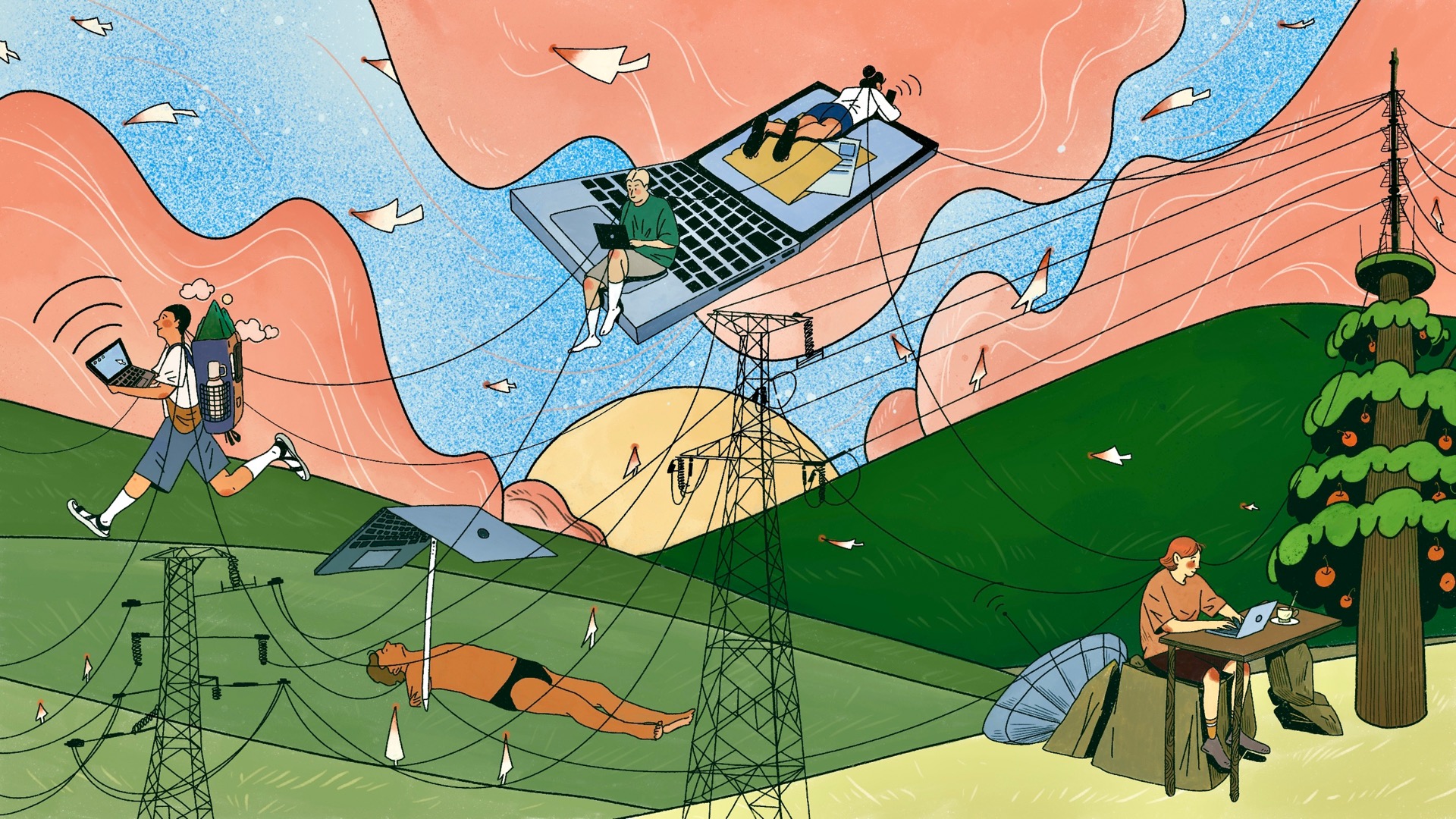
The opportunities digital capabilities bring to the sector are real. Rewiring America have shown that upgrading households with heat pumps, rooftop solar, and storage could offset the entire projected surge in data center demand, putting households at the center of the energy solution rather than at the mercy of it, benefitting communities and turning energy consumers into prosumers. At Colorado Climate Week in April 2026, efficiency was the word of the week when it came to energy: much of our power generation capability is not used for significant portions of the day, and we can meet demand by optimizing that use through DERs. A well-orchestrated fleet of DERs is a lot more cost effective and responsive than building new generation or transmission, and creates entirely new energy dynamics. Imagine your home as a node on an energy network the way it's a node on the internet today: electrons routed like packets, neighbors sharing power directly, the grid resilient by design because it's decentralized by architecture. Instead of paying per kilowatt-hour the way we once paid per minute for dial-up, you'd pay a flat monthly fee for as much clean energy as you need, the same shift that turned Sweden from modem connections to unlimited broadband, applied to the power grid. Jonas Birgersson of EnergyNet in Lund is building a proof-of-concept thats doing exactly that by treating electrons like data packets — locally generated, locally shared, software-coordinated, open protocol — the same architectural innovation that gave us the internet, applied to energy distribution.(Listen to this Volts episode on how this is coming to life in Sweden.)
The risks are equally real. New players are entering a market regulated for a very different energy era, introducing gaps around governance, privacy, consumer protection and more. Virtual power plant aggregators, demand response platforms, and DER orchestration layers sit between distributed assets (your solar, your battery, your flexible load) and the grid services markets that pay for them. VPPs can sell grid services (frequency regulation, peak capacity) at rates that dwarf what a member earns from a simple demand response credit, and the margin between what the grid pays for aggregated services and what individual participants receive back is the business model. Who controls that coordination layer, and on what terms, is being decided now, mostly by default, while attention stays on the technology. At the more aggressive end, the Cato Institute is already making the case for consumer-regulated private parallel grids, a model that could accelerate innovation and bypass regulatory capture, but could just as easily bifurcate the system: resilience and abundance for those who can pay, legacy grid dependency for everyone else. Smart grid participation generates detailed behavioral and consumption data, introducing very real data sovereignty concerns. The question of who owns, controls, and benefits from data is one the digital economy never answered well and that we’re frankly just starting to understand the extent of the impact.
Looking at the arc of digitization, data can be treated as a resource to extract value, and it can be treated as a resource to deliver value. The internet offers a specific and recent case study in how infrastructure transitions play out, and how value is delivered or extracted, in the digital age: from democratization to consolidation at both the infrastructure and the platform level, and ultimately extraction, as evidenced by works by Tim Wu, Cory Doctorow, and Yanis Varoufakis. The structural decisions that determined who captured value were made early, mostly by default, while attention was on the technology itself. The dynamics of data and platform economics is now mainstream conversation, and when you consider energy in that equation, new energy futures quickly present themselves.
It’s worth recognizing that the energy sector is a mature, established sector with well established regulations and norms, vastly different from a nascent technology with no existing infrastructure. And, so was the telecommunications industry right before it digitized. A smart analysis considers the players to get a sense of the game. With the likes of Oracle, Palantir, Meta, Google, and Microsoft on the field, given the immense strategic importance of energy, it feels like a safe bet that their playbooks will continue into the energy space as it digitizes.
The wholesale restructuring, co-ops move to independence, distributed generation, demand response programs are the early signals of the same structural shift we saw in telecomms: a commodity infrastructure layer decoupling from a service relationship layer, where a scramble to figure out who “owns” the customer is one very likely path on this journey. Energy infrastructure is turning to hardware and software, making significant parts of the energy infrastructure now a commodity. And when infrastructure becomes commodity, the relationship, and the data in that exchange, becomes the product. That happened with bandwidth. It happened with banking. The arc is starting with electrons. The energy users / prosumers device, data, and participation are the raw material, and who captures most of that value, and who designs the relationships and experiences around it, is almost entirely unresolved.
Energy companies are asking fundamental questions that redesign this relationship deliberately, with promising lessons from challengers in the space. Octopus Energy, for example, started by asking a different question than its competitors, built backwards from that question to its technology and tariffs, and is now one of the largest retail electricity suppliers in the UK with operations across four continents. We'll dig into what they did and why it matters in the next post.
WHOLE Innovation & Design has spent years helping organizations ask the question “what relationship are we building?” and designing the path forward bridging people and technology. That's the question the energy sector needs now, and we’re paying close attention. The decisions that shape who benefits, who has voice, and what world is being built are being made in this window. We bring deep experience in orchestrating digital services that can offer real value to businesses, energy citizens, and communities in the digital transformation of the energy sector. This is a first in a series tracing the digital infrastructure buildout in energy, the value structures forming around it, and what the open design window means before it closes.